Showing posts with label life. Show all posts

Friday, February 6, 2026

I said goodbye to you quietly

02-06-2026

©2026 BTMT-TJ

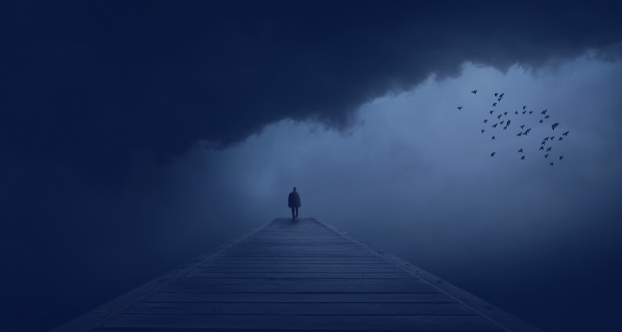
I said goodbye to you quietly. There was no letter written, no speech rehearsed, no dramatic moment to mark the end. It was the kind of goodbye that happens without ceremony, the kind two people understand without ever agreeing on the words. It lived in the pause, in the space where nothing more could be said.

I believed that goodbye would bring peace, and in some ways it did. Still, questions linger. I catch myself wondering who I would be to you now. I wonder how you would read the words I write today, what you would think of the ideas that occupy my mind, how time might have reshaped the way you saw me if our lives had not drifted apart. Those thoughts arrive uninvited, carrying a tenderness that surprises me.

I said goodbye to you, yet the mind has a habit of wandering into alternate versions of reality. There are moments when I imagine a life where you remained, where we continued alongside each other. Those imagined paths feel vivid, almost reachable. Still, no amount of wondering changes what is true. You are no longer here, and the story we shared has reached its ending.

What I miss may not be you as you truly were. It may be the version of you shaped by memory and longing, softened by distance, edited by time. The person I revisit in my thoughts may never have existed in quite that way. Perhaps what I miss is the idea of you, the comfort of what I believed we were, rather than the reality we lived.

I said goodbye to you, though letting go has not been simple. You occupied so much space in my life that moving forward without you feels disorienting. Your presence was threaded through ordinary moments, habits, and places. Without it, something feels unfinished, as though a sentence ended too soon.

Even so, I know that reopening that door would not bring healing. Growth has carried us in different directions. There is no blame in that, only change. I understand that seeing you again would stir memories I have worked hard to steady. The pain would return alongside the nostalgia, and I would lose my footing all over again.

The past cannot be revisited without cost. What was cannot be restored, and distance has become a form of care.

I said goodbye to you, and I am learning to release the question of what might have been. The answer never changes. What has ended has ended for a reason. Some things are meant to remain in the past.

Acceptance is a practice. I am learning to stop searching for you in familiar streets, in strangers’ faces, in echoes of old conversations. I am learning to let your absence be real, rather than filling it with imagined returns. This time, the letting go is intentional.

Thank you for what we shared, for the moments that felt light and the ones that hurt. Thank you for being present when I needed connection. Thank you for the ways you made me feel seen, even briefly. Gratitude can exist alongside pain. Both shaped who I am now.

This goodbye is not dramatic. It is honest.

I release you, and I release the story of what could have been.

.

.


Love should never demand that you change in order to be worthy of it.

02-06-2026

©2026 BTMT-TJ


I once believed that love should arrive without requirements. That it should be unconditional in the purest sense, asking nothing of us and leaving us exactly as we are. To be loved, in that view, meant being accepted fully and immediately, without edits or adjustments, without having to become anything other than who we already were.

That belief is not wrong. Love should never demand that you change in order to be worthy of it. It should not become transactional or conditional, keeping score of effort or sacrifice. Love should welcome you in all of your states, in your confidence and in your doubt, in your tenderness and in your shame.

Still, there is another truth that took me much longer to understand. Love, when it is allowed to deepen, has a way of inviting change.

Not the kind of change that erases you or reshapes you into something unrecognizable. Rather, the kind that asks you to stay present with yourself instead of turning away. Love may ask you to feel what you have learned to avoid. It may want to see the parts of you that have lived in the dark for a long time. It may ask you to trust again, even while knowing that trust always carries the risk of being hurt.

We are often taught to expect love to arrive complete and effortless, as though it should bloom fully formed and remain untouched by time or struggle. What we hear less often is that love grows, and growth rarely leaves us unchanged. When love matures, it asks something quiet yet demanding of us. It asks whether we are willing to grow alongside it.

I used to think love was the answer to everything. Now I see it more as an invitation, even a challenge. Love asks difficult questions without raising its voice. Can you remain present when it would be easier to disappear? Can you speak honestly when silence once protected you? Can you allow yourself to be influenced, shaped, and expanded by connection?

True love does not force transformation. It does not break you down or insist that you become someone else. Still, it creates a space where staying exactly the same begins to feel uncomfortable. Not because you are lacking, but because there is more available to you. More depth. More awareness. More capacity to give and receive.

Love does not require you to abandon who you are. It does, however, leave its mark. It changes how you listen. It changes how you speak. It changes how you stay when things become difficult. These shifts do not erase you. They refine you.

Perhaps this is what it truly means to be loved. Not to be preserved in stillness, frozen in a single version of yourself, but to be met so fully and honestly that change becomes possible. To be changed without being lost.


Thursday, February 5, 2026

Grief changes us, sometimes all at once, sometimes gradually, yet always profoundly.

02-05-2026

©2026 BTMT-TJ


Grief changes us, sometimes all at once, sometimes gradually, yet always profoundly. 


Most of us learn to recognize grief only in its most visible forms. We associate it with losses that arrive with certainty and permission. Someone dies. A relationship ends. A chapter closes in a way that leaves no ambiguity. There is a clear before and after, a story that makes sense to tell, a pain that others immediately understand.

In that framing, grief feels legitimate. It has a name. It has witnesses. It does not require explanation.

The trouble begins when something inside us feels heavy without fitting that familiar narrative. There is a weight we cannot point to, a longing without a clear object, an absence that resists definition. We search for reasons and come up empty. The feeling does not match the stories we have been taught to associate with grief, so we dismiss it. We call it exhaustion. We call it sensitivity. We call it overthinking.

Still, it lingers.

There comes a quiet and unsettling question in moments like these. What if this, too, is grief. What if we have been carrying it unnamed for far longer than we realized.

Some grief announces itself immediately. It arrives when someone who felt permanent is suddenly gone. The absence is unmistakable. The world rearranges itself around the space they once occupied. Time moves differently. Even ordinary moments feel altered, as if the body must relearn how to exist in a reality that no longer includes them.

This kind of grief is widely recognized, yet it is rarely simple. It does not resolve so much as it stretches. We learn how to carry the loss while continuing forward, how to hold memory and absence in the same breath. Life continues, not because the grief ends, but because we learn how to live alongside it.

Other forms of grief are quieter and more confusing. Sometimes nothing officially ends, yet everything feels different. A relationship still exists on paper. A friendship remains intact in name. There is no dramatic rupture, no clear moment that signals a loss. Still, the ease that once defined the connection disappears. The closeness becomes unreachable.

This kind of grief often arises from internal change. Values shift. Boundaries sharpen. Priorities rearrange themselves. The other person may remain the same, yet the version of you that once met them effortlessly no longer exists. There is no villain in this story. No betrayal. No abandonment. What is lost is a shared rhythm, a mutual understanding that once required no effort and can no longer be recreated.

There is grief in that realization, even when love remains.

Internal transformation brings its own mourning as well. Growth requires releasing identities and patterns that once felt necessary. Beliefs that offered safety at one stage of life can begin to feel restrictive at another. Roles built around approval, achievement, or perfection may have helped you survive, helped you belong, helped you feel secure.

When those parts no longer fit, letting them go can feel surprisingly sad. Even unhealthy coping strategies often carried a promise of protection. Releasing them means acknowledging that they once served a purpose. It also means saying goodbye to a version of yourself who did their best with what they had. Becoming someone new often requires grieving who you used to be.

Some of the deepest grief lives in what was never given. Love withheld. Support that never arrived. Care that was inconsistent or conditional. This grief does not come from losing something you had, but from realizing how much you needed something that never fully existed.

This kind of grief matters. Naming it does not mean assigning blame or reopening old wounds. It means honoring the truth that absence leaves a mark. It means recognizing that unmet needs shaped you in ways both visible and unseen. Allowing yourself to grieve what you deserved but did not receive can be a profound act of self compassion.

Grief also lives in the futures we imagined and never reached. Plans that felt certain. Paths that seemed inevitable. When those visions dissolve, the loss can feel disorienting. Even when life eventually brings something meaningful in a different direction, the original hope still deserves to be mourned.

Disappointment does not disappear simply because a new door opens. Grieving what did not unfold as expected makes room for clarity. Often, what feels like an ending reveals itself later as a redirection. The path was not erased, only changed.

Grief rarely arrives in a single, orderly form. It overlaps. It layers. It lingers. It moves through relationships, identities, expectations, and dreams. It does not always announce itself loudly. Sometimes it simply hums beneath the surface, asking to be acknowledged.

When grief is named, it begins to soften. When it is allowed, it becomes less isolating. Even when it remains painful, it deepens us. It expands our capacity for empathy, presence, and understanding.

If any part of this feels familiar in ways that are difficult to articulate, that recognition alone matters. You are not alone in carrying unnamed grief. Many of us are learning, slowly and imperfectly, how to hold it with care.

Grief changes us, sometimes all at once, sometimes gradually, yet always profoundly. Even so, we continue. We adapt. We become.


________________________________________________________________


Sunday, March 7, 2021

Is It Already Too Late?


When you were born, you could have been anybody. So quick and malleable, your parents could look at your face and see a future president. They tried to mold you as you grew, but they could only work with what they had. And when their tools stopped working, they slowly handed off to you, asking, "What do you want to be when you grow up?" There's a certain art to becoming who you are. 

A teenage personality is a delicate medium, its emotions are almost too heavy to handle. You have to keep yourself together, and tease out the good parts without stretching yourself too thin. You can never stop moving for too long, or focus on just one side of your personality, or you'll fall out of balance, and never stand on your own two feet. 

You can't ignore your flaws-you see them so clearly-but you can't just fix them either, and force yourself to change. And you need to make it look effortless, even if you keep getting burned. But the toughest thing to master is the sense that your personality is hardening over time. That the fire that kept you flexible all these years is dimming, and you're becoming set in your ways. 

You can still recall the heat of youth, that once kept you warm on a dingy couch, or a night in the wilderness, or a wandering summer. At any given time you remained untouchable, because you were 'not yourself today.' You knew that you weren't just you, you were also the person you will one day become, finding comfort in the lines, "I am not I. I am the one walking beside me...who stays calm and silent while I talk, and forgives, gently, when I hate, who walks where I am not, who will remain standing when I die." 

But now it's hard to deny that you are anyone but yourself; you are who you are, for better or for worse. For all your wondering what kind of person you were going to become, somewhere you forgot that question actually has an answer, and that 'one day' will soon arrive, if it hasn't already. Now you wonder if you can change, even if you wanted to. 

If you have enough fire in the belly to surprise yourself. Or if you're too tough and cynical to stretch without shattering. Of course, maybe who you are is just fine, and dreaming of being someone else would only keep you from being your best self. Or maybe that doesn't really matter.

Maybe it's already too late...


The Bass Player

*

Tuesday, February 9, 2021


“All of humanity’s problems stem from man’s inability to sit quietly in a room alone.”

According to Blaise Pascal, we fear the silence of existence, we dread boredom and instead choose aimless distraction, and we can’t help but run from the problems of our emotions into the false comforts of the mind.

The issue at the root, essentially,

is that we never learn the art of solitude.

~TBP

02-09-2021


Saturday, March 14, 2020

3:00 a.m. Challenge

About 3:00am this morning these thoughts were running through my head. I scribbled some notes and then stared at the ceiling for 3 more hours. -

When we least expect it, life sends us a challenge to test our courage and willingness to change. When the challenge arises there is no point in pretending that nothing has happened or complain about not being ready to face it yet. The challenge will come.

Life does does not stop nor move backward for anyone. The moment we are challenged is the proper time for us to decide whether or not we will accept the change life is going to require us to make.

The alternative to facing the challenge head-on will most often negatively impact our life in ways that will be even more difficult to overcome.

Meet your challenges head-on. It is always the best way to move forward in life.

©2020KJackson

Monday, February 10, 2020

Perception...


Perception is a very tricky topic.

If we are talking about the material world (physical realm) I believe that the reality of a situation is based upon the correspondence view of what is true (real).

Metaphysically speaking, as I suppose we should be engaged in doing within this forum, perceptions could be described as, “what is there?” and “what is it like?”

This topic could encompass volumes of writing, but within this forum there is a need to be brief.

I have used the following many times to illustrate how perceptions can differ, but reality is static. If I say, “The grass is green,” I have offered my perception of what I believe the grass to look like. That perception is based on light emanating from the sun (or some artificial source), reflecting of off the grass, enters through the cornea, passes through the lens which bends the light, which then passes through the vitreous gel, and then is focused on the surface of the retina which contains the rods and cones. From there it travels via electrical impulses to the brain through the optical nerve. Is my perception accurate?

That depends on several factors. Is the pathway the light travels through my eye healthy and “normal?” Does my brain process the electrical impulse correctly? Do I have the cognitive ability to decode the information? Finally, is the grass, in fact, green? If the grass is green, and I am healthy and/or at least functioning correctly, I am accurate in my assessment. At that point, the grass being green makes the content of my perception true.

However, is it a true statement to say, “The grass is green,” if I am blind? Not only is it an accurate statement, it would an accurate perception even if I did not believe it to be true. It is reality that makes our perceptions true or false. I posit that it is through evidence that we determine if our perceptions are in tune with reality.

KJ